Faith and Fear: The Origin of Superstitions
Project Type
Nathan Young
Instructor
Publication Design
Date
May 2026
According to Merriam-Webster, superstition is “a belief or practice resulting from ignorance, fear of the unknown, trust in magic, or a false conception of causation”
This definition makes superstition seem irrational and overlooks the cultural meThis definition makes superstition seem irrational and overlooks the cultural and personal meaning these beliefs hold. I realized this when thinking about Chinese New Year, a time full of tradition, taboo, and celebration. Growing up, I learned many superstitions tied to the holiday, like avoiding washing your hair on New Year’s Day or taking out the trash to prevent losing good luck. This year, I could not go home, so conversations with Asian friends made me reflect on the traditions our families share, from deep cleaning to early haircuts to temple visits. What began as a casual discussion became a broader look at how culture shapes superstition and how these traditions evolve into the beliefs people follow today.
Research
Due to the quantity of superstitions around the world, my research began with categorizing them based on practices, conditions, and intent. As my topic is niche, one of the challenges was finding scholarly sources on the origins of different superstitions. Many articles contained extraneous information, and some were unreliable. I mainly relied on interviews, open source databases, and survey results to write my publication.
In choosing my superstitions, I started with some of the most common ones, like black cats, walking under ladders, knocking on wood, etc.⁴ My choices were based on the reliability of the information I could gather. Some had clear origin points, while others were too simple or had little to no information at all.
Branding
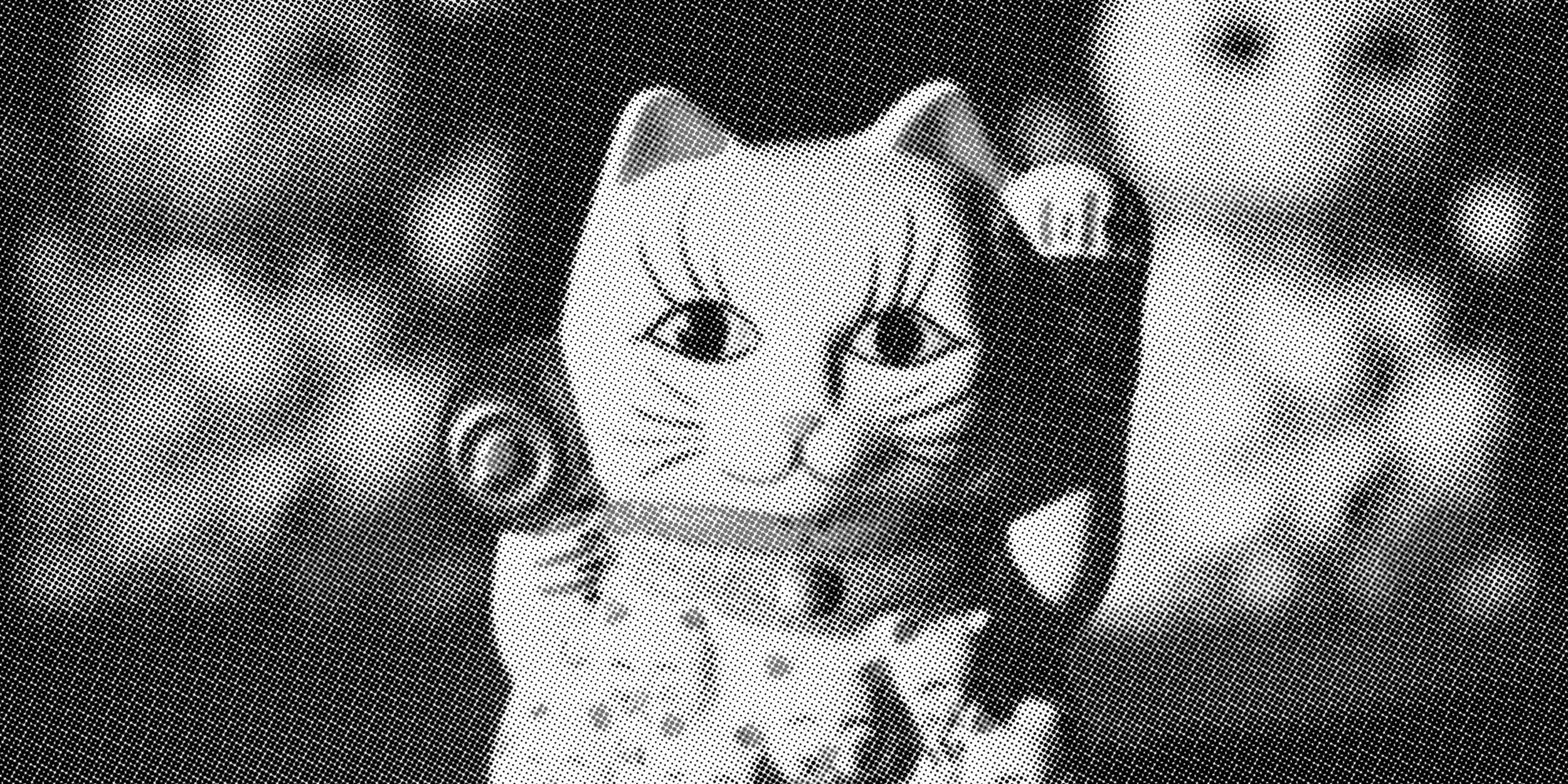
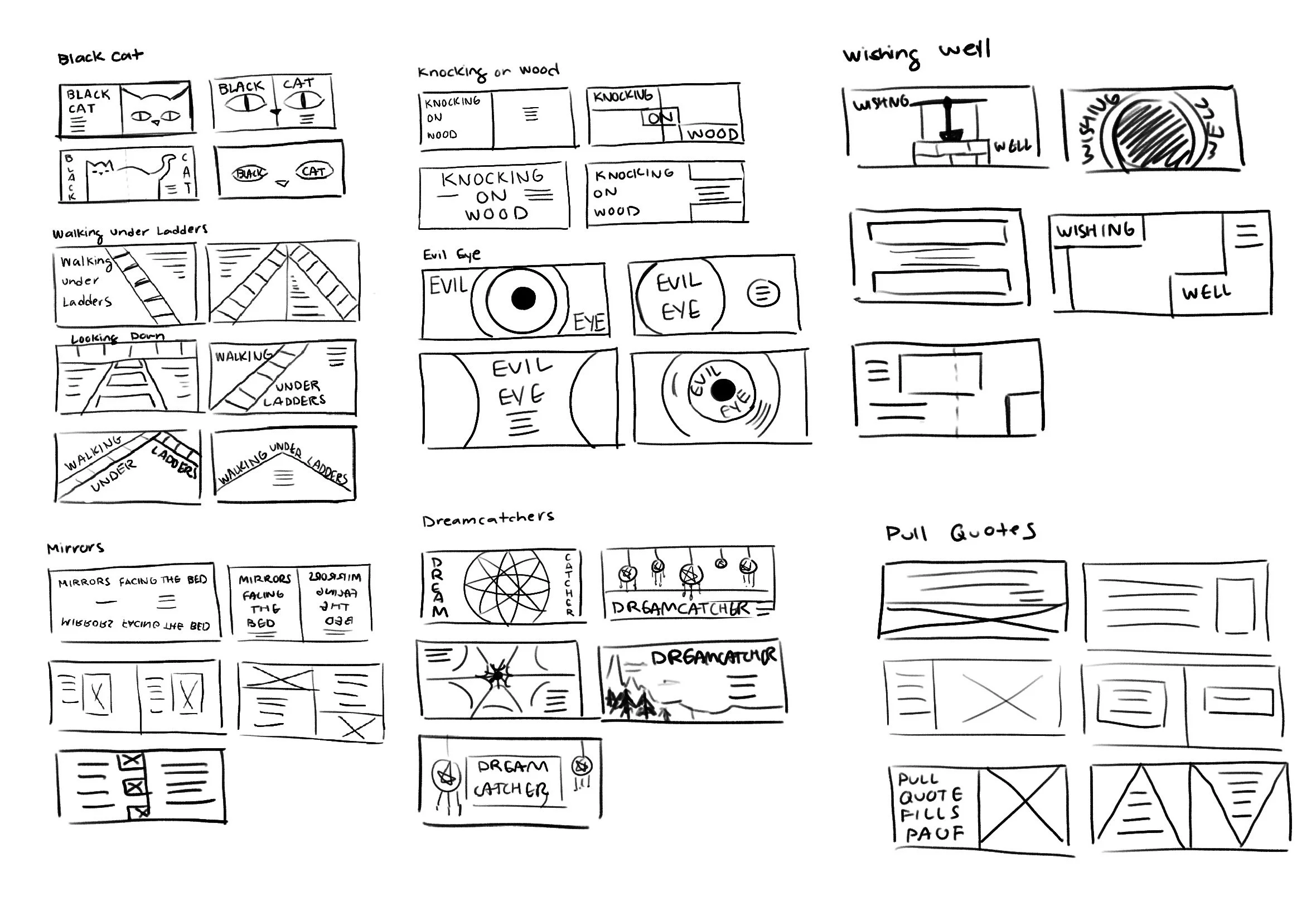
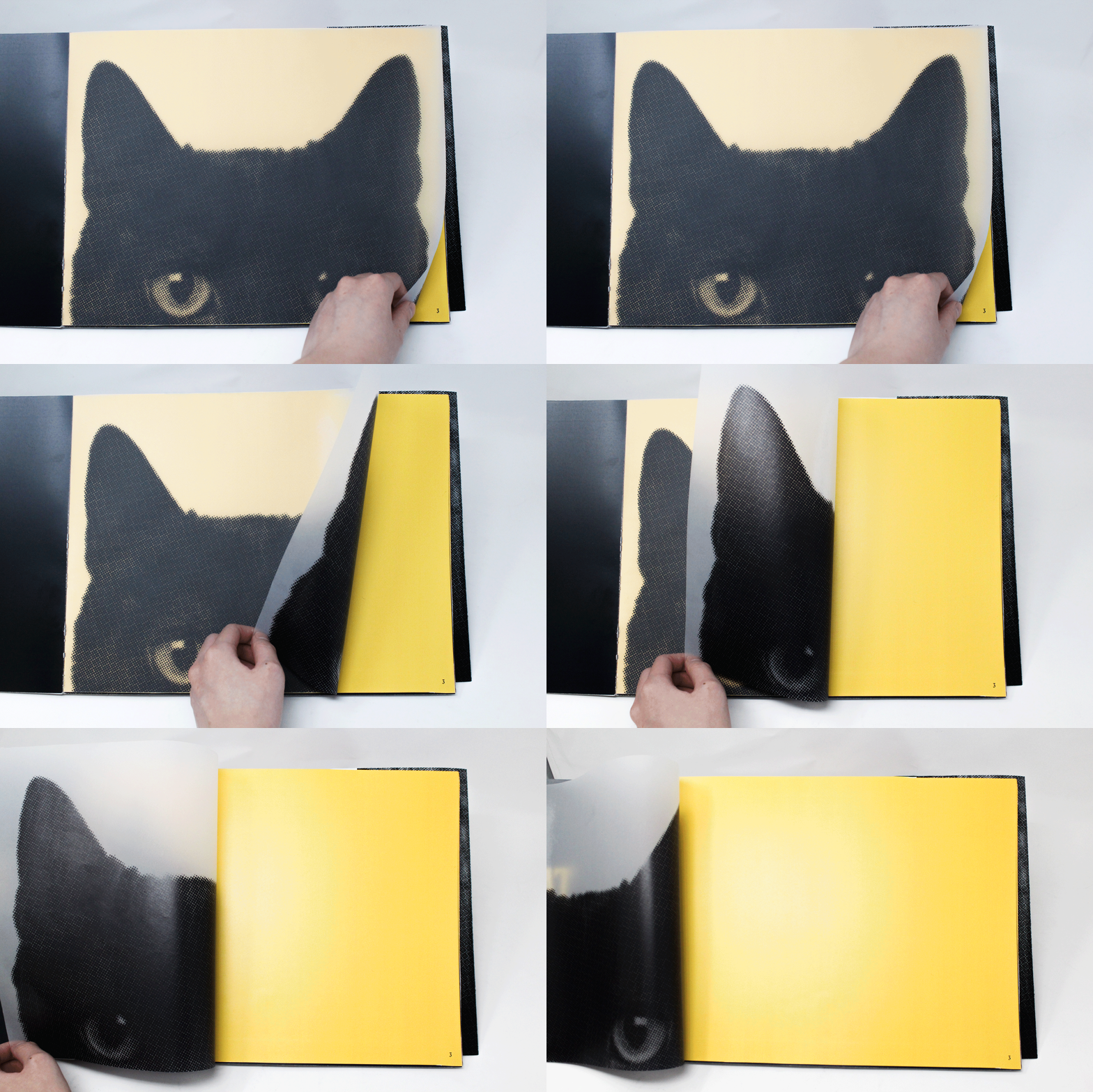
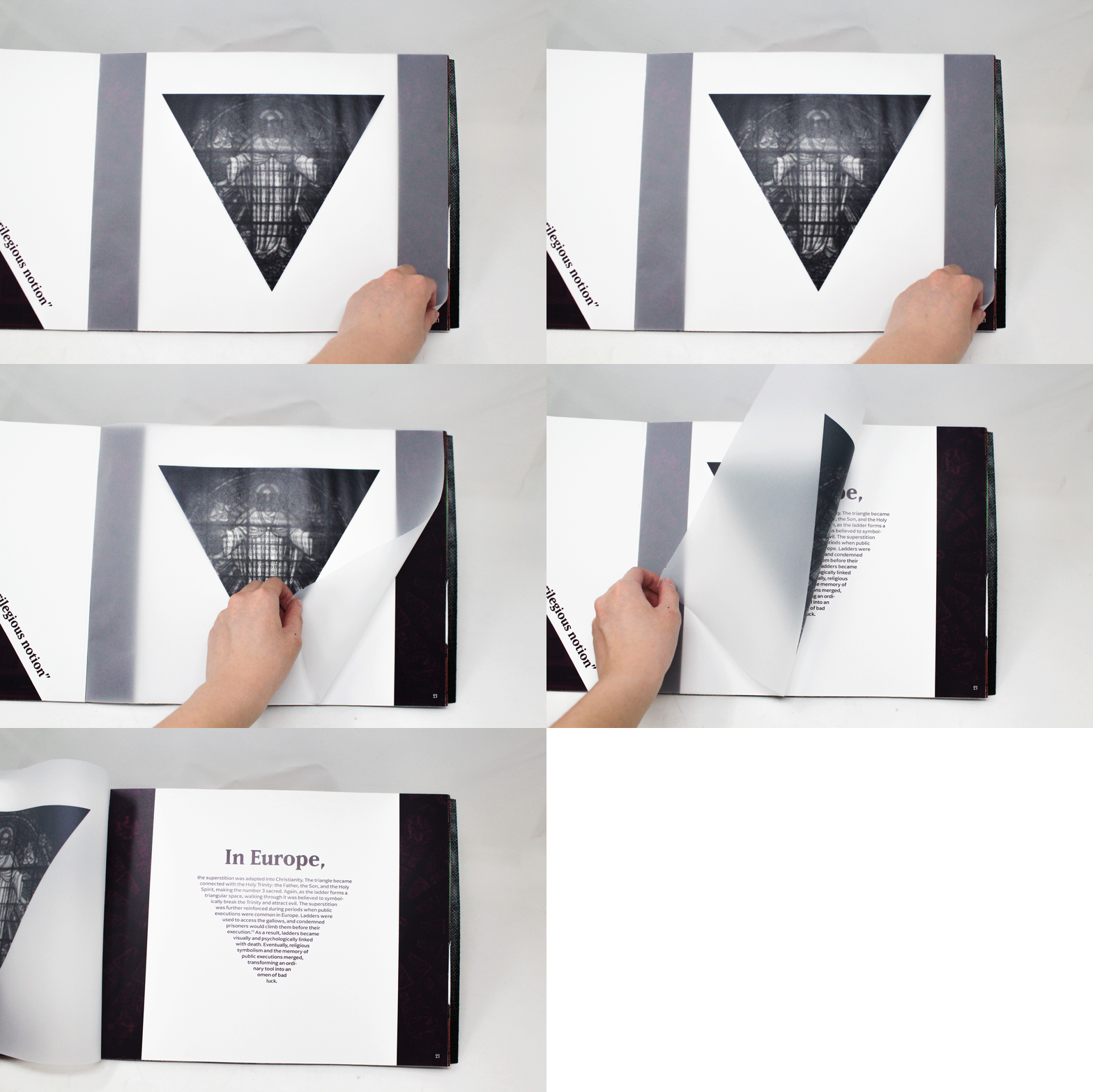
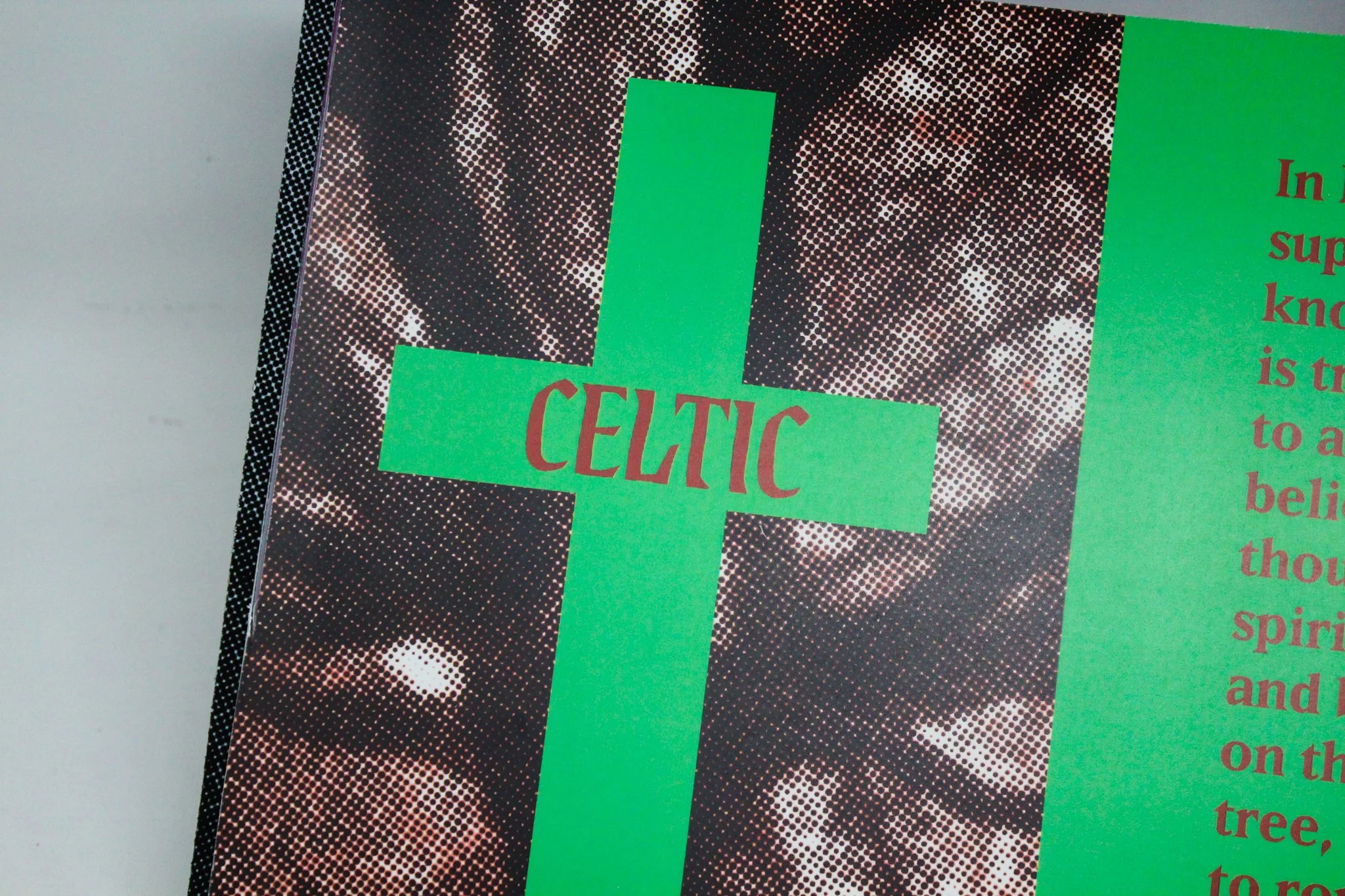
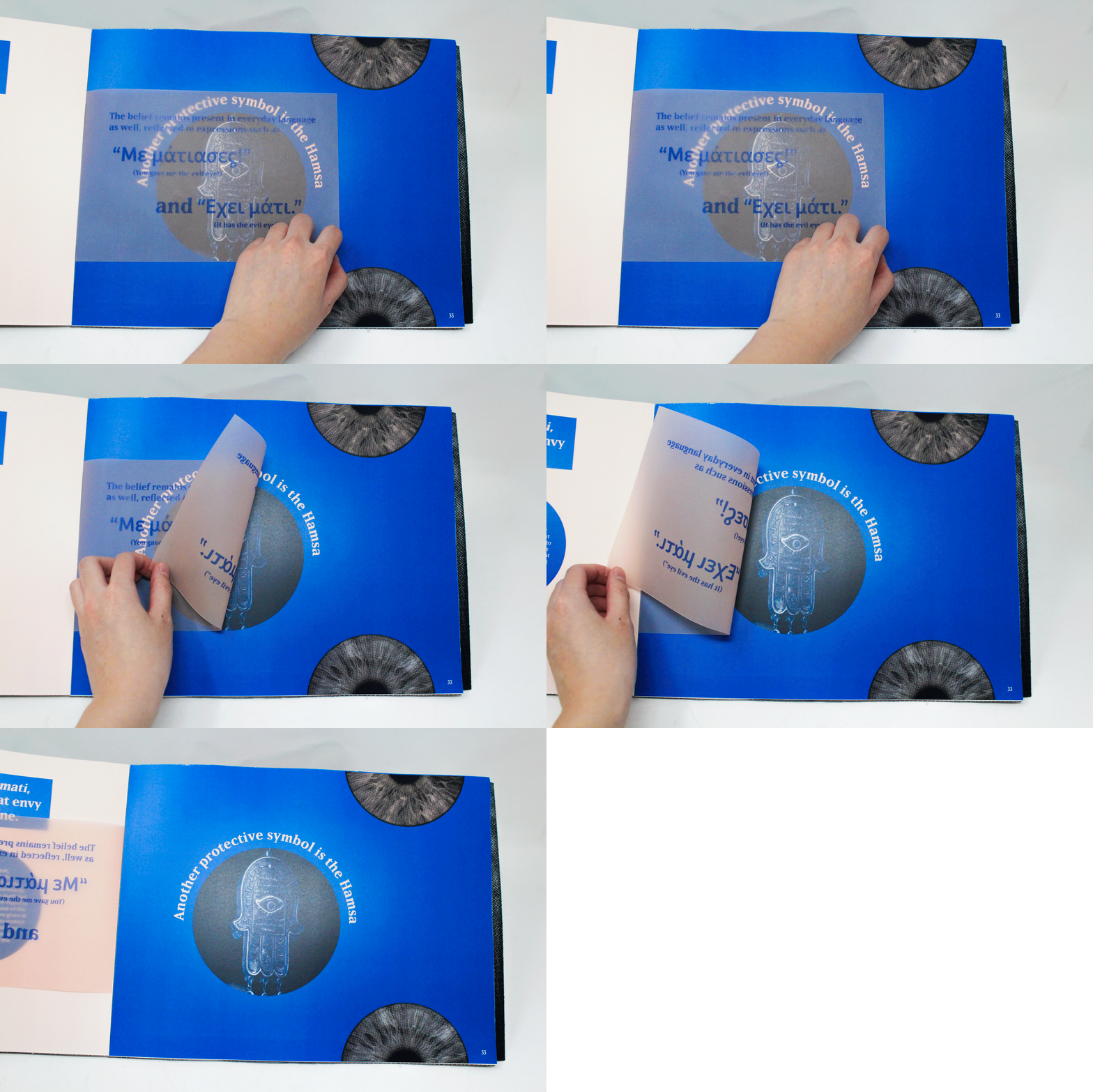
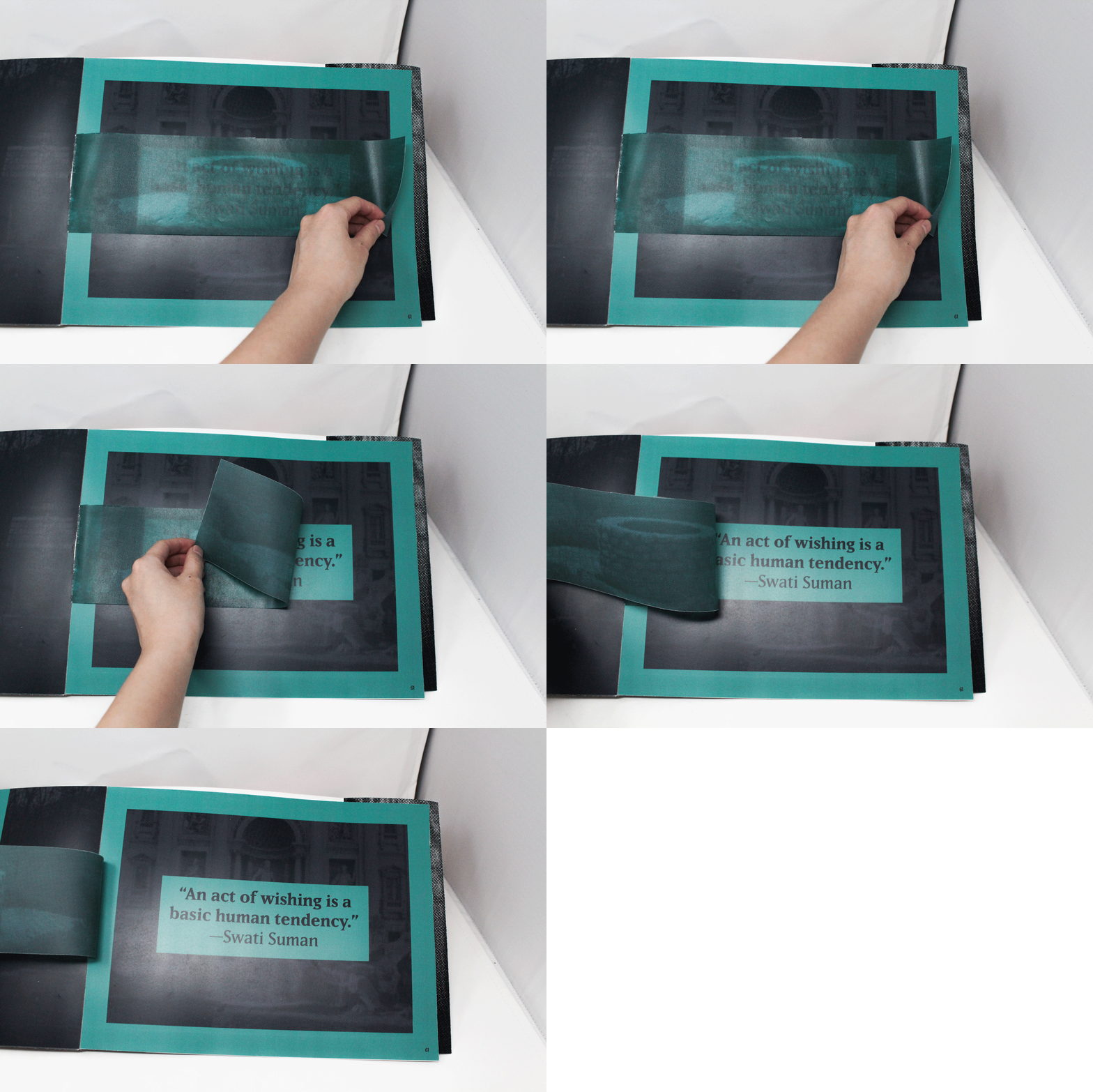
Within my design, I wanted to incorporate a zine‑like style, so I halftoned images to add texture and create a more tactile feel. I limited each spread to two colors to maintain consistency while still allowing variation between sections. Every layout and color choice was carefully considered, with color serving as a symbol that references the history behind each superstition. The placement of the vellum pages was also intentional, designed to make the book more interactive and engaging as the reader flips through it.
The Superstitions
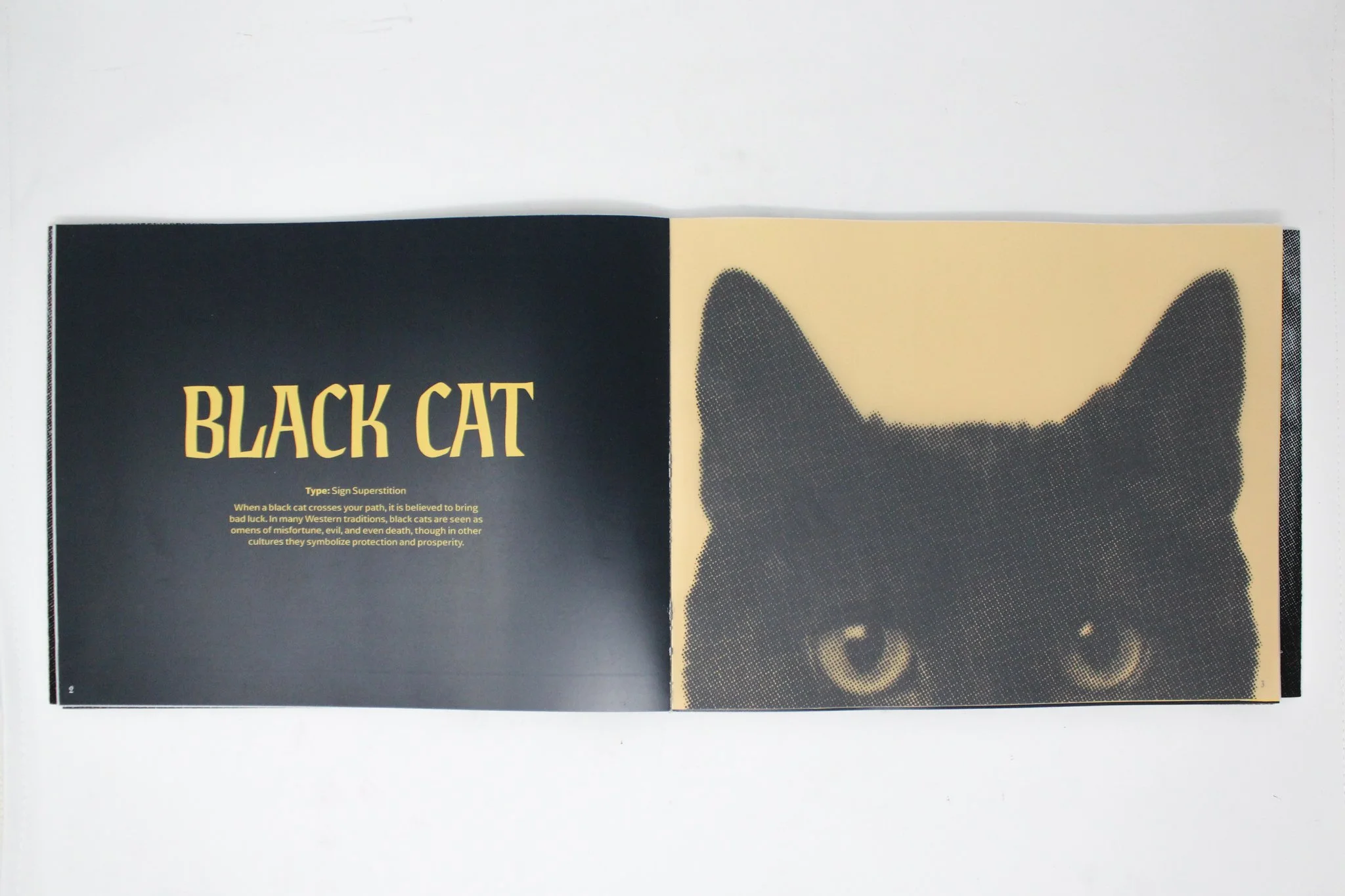
Black Cat
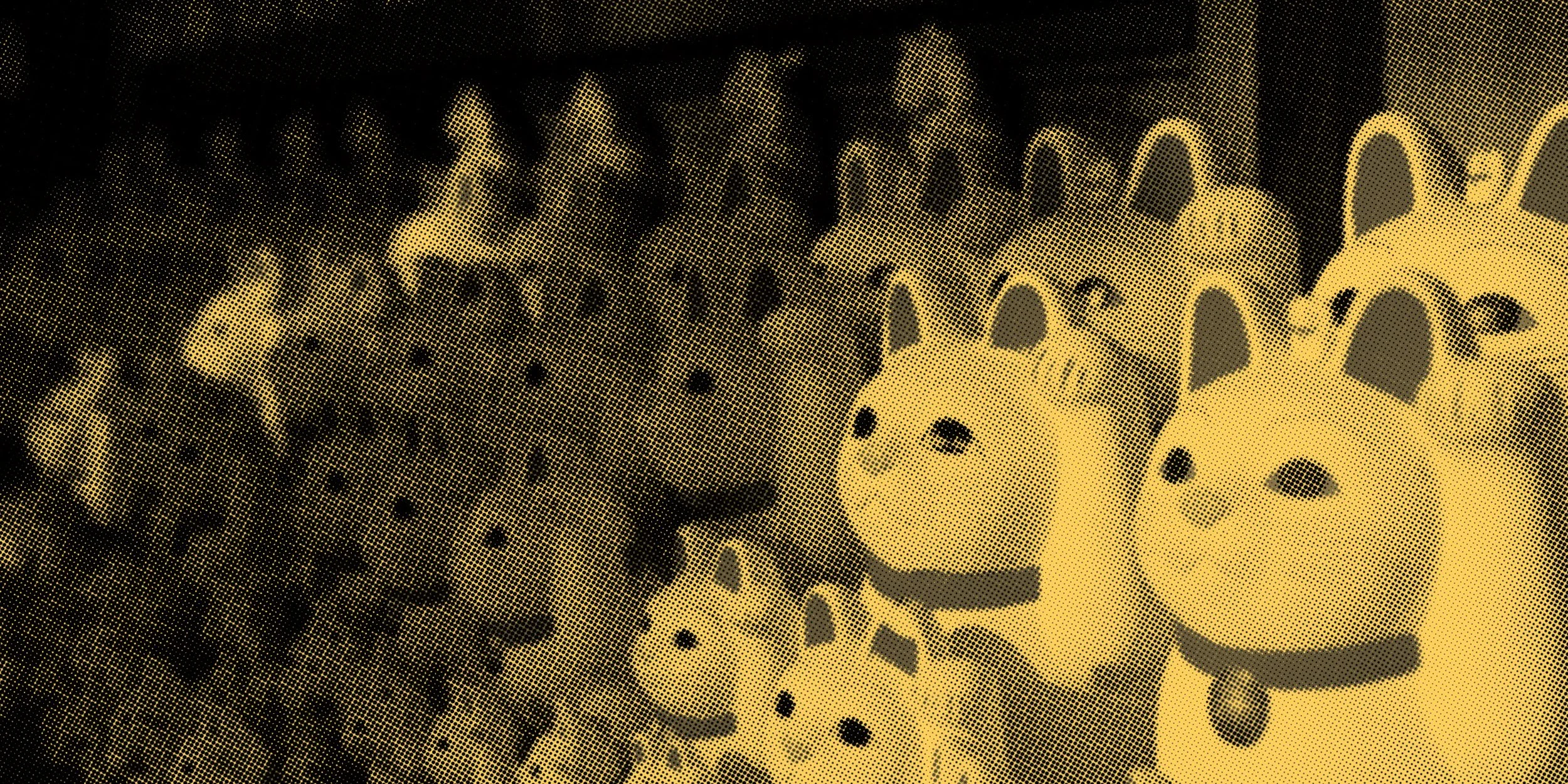
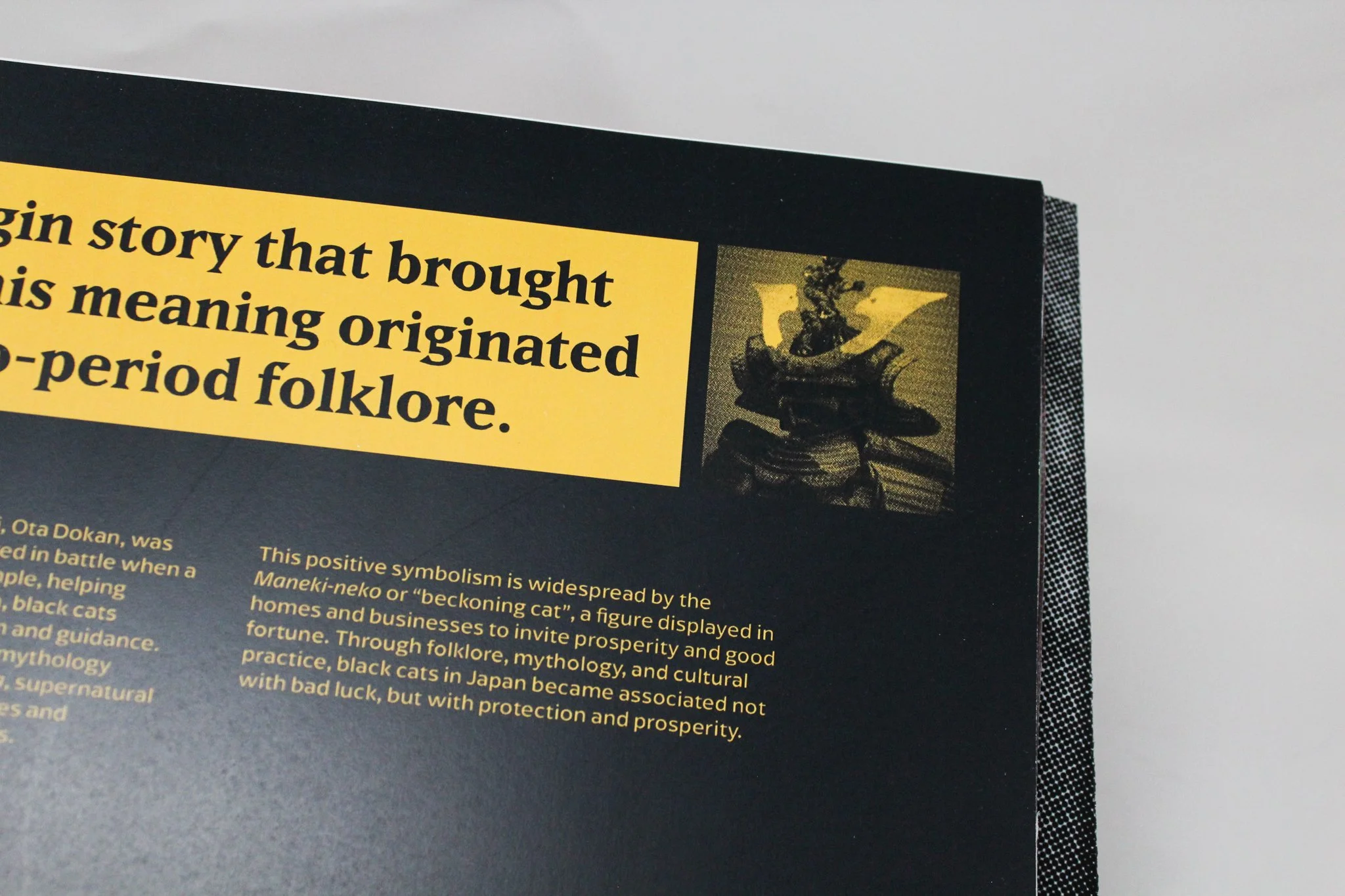
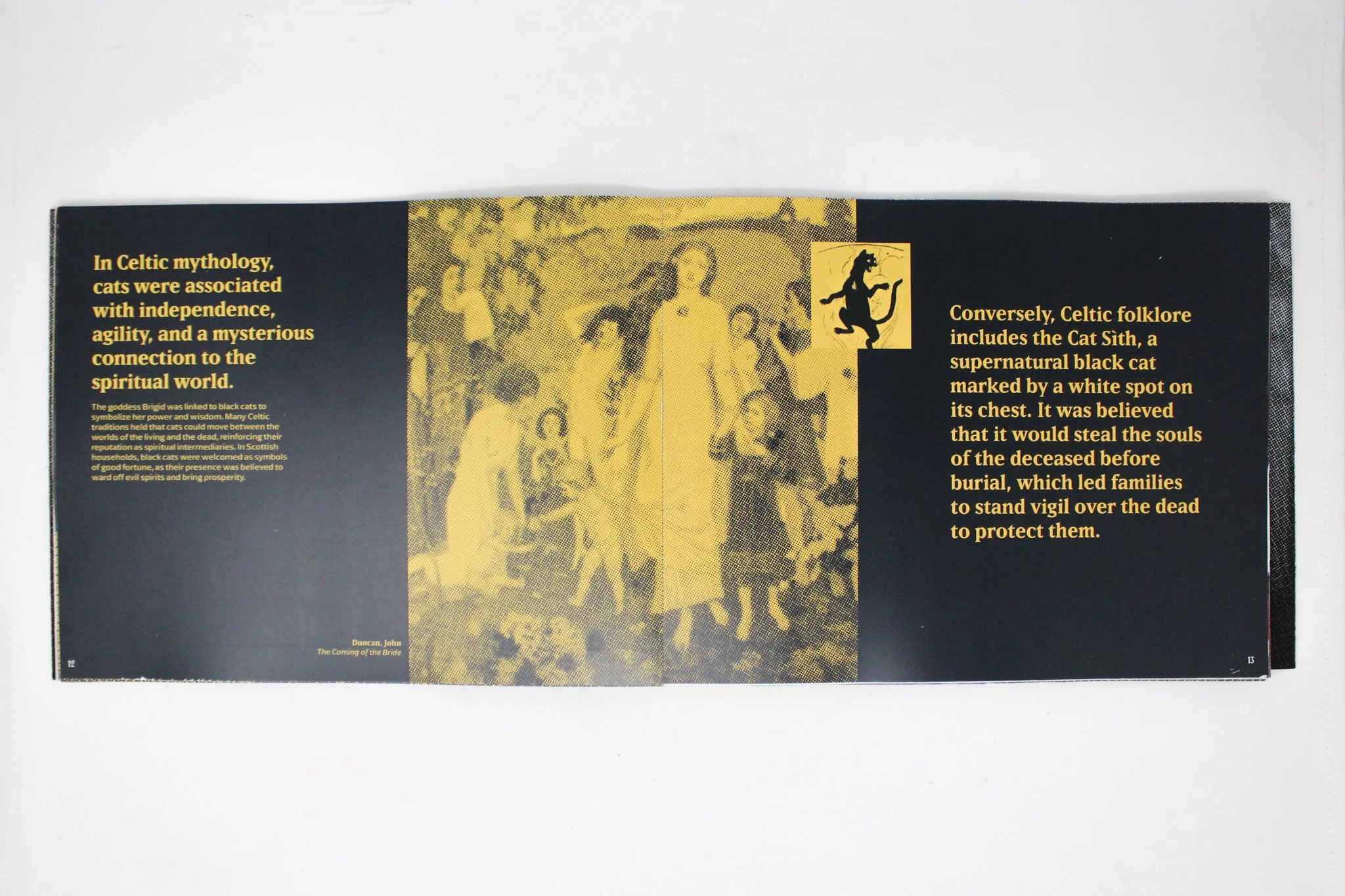
I personally never believed that black cats were unlucky, but it’s one of the most well-known superstitions today. For this section, I wanted to explore how black cats are perceived in other cultures to contrast their negative connotation. For this reason, I included Japan¹¹ and Scotland, where black cats are often seen as symbols of protection and good fortune⁷.
Walking Under Ladders
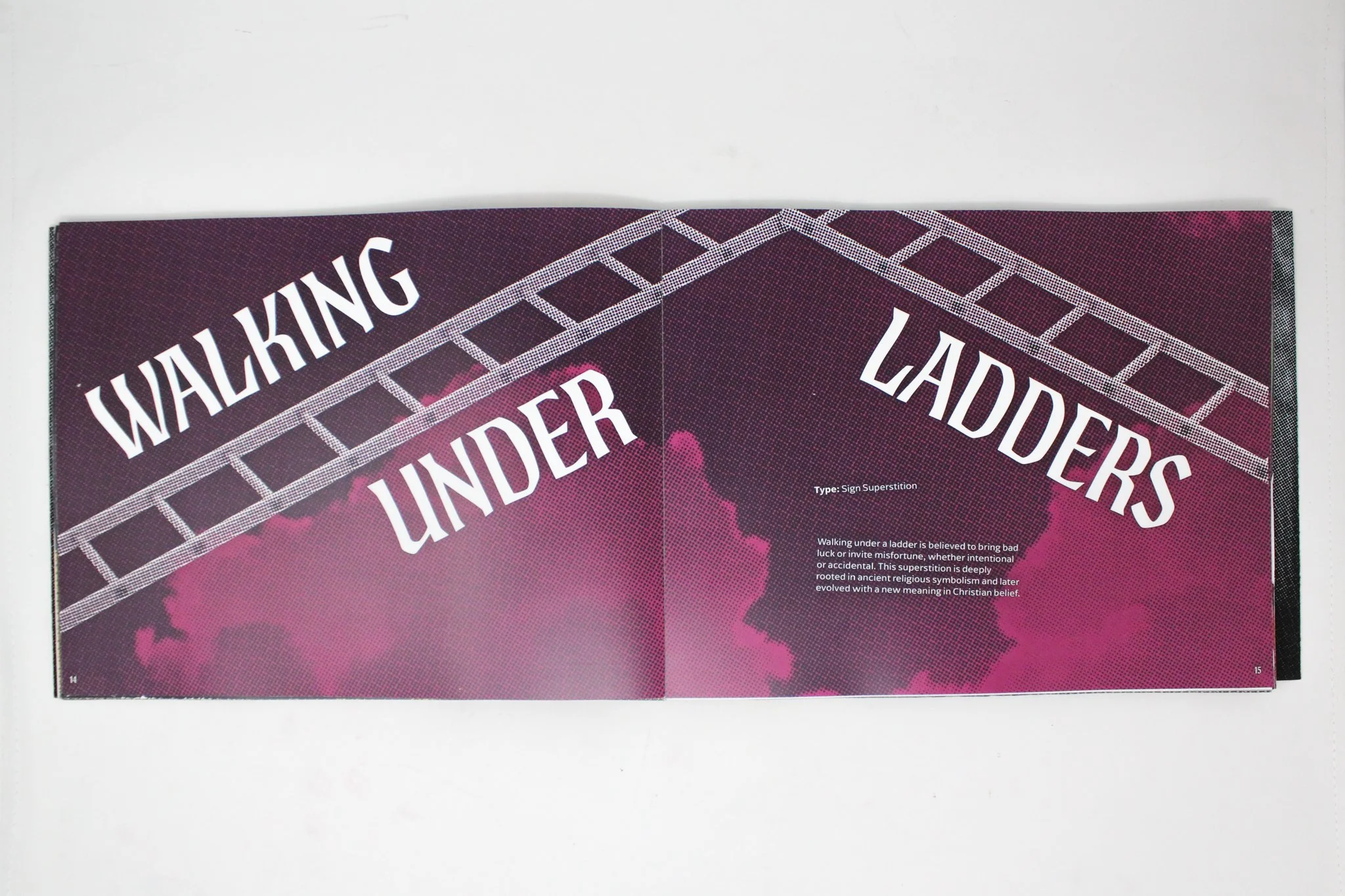
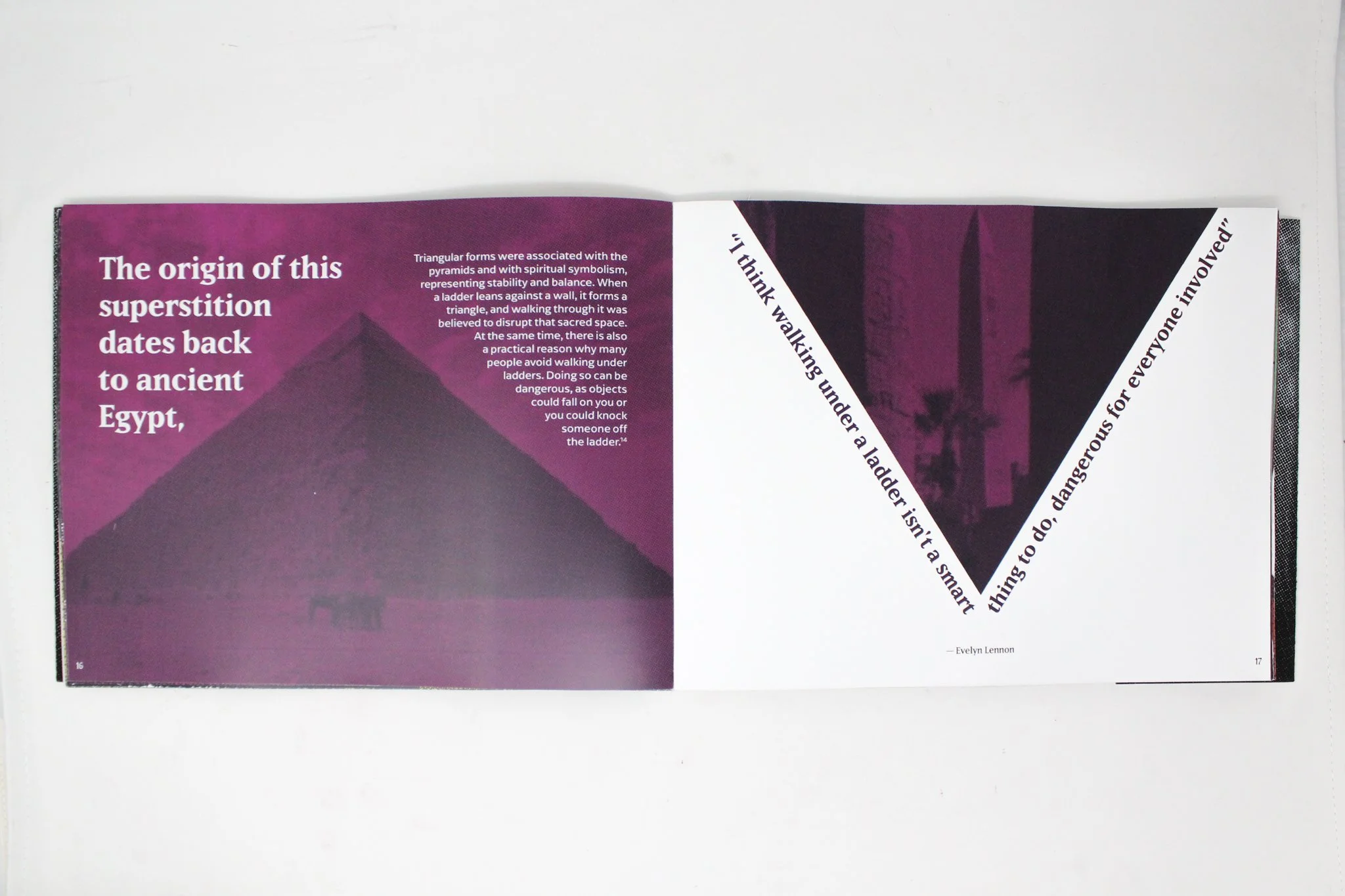
Avoiding ladders seems logical for safety, but I wanted to understand the deeper origins. The emphasis on the triangle in Egypt¹⁴ and Christianity shaped my design, so the text and images follow that form. I also learned that purple was a sacred, expensive dye in the Middle Ages, which guided my color palette of purple and white.
Knocking on Wood
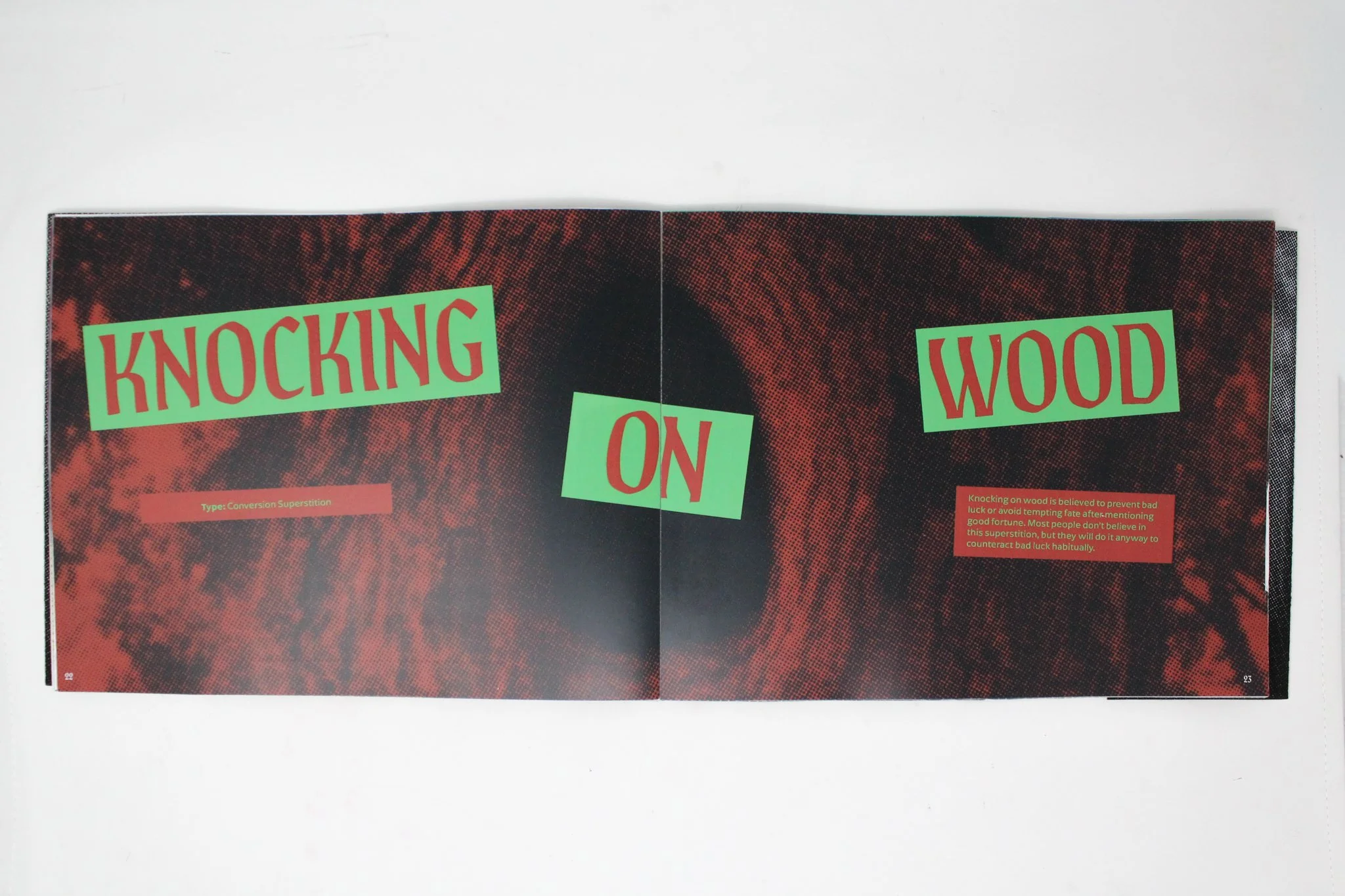
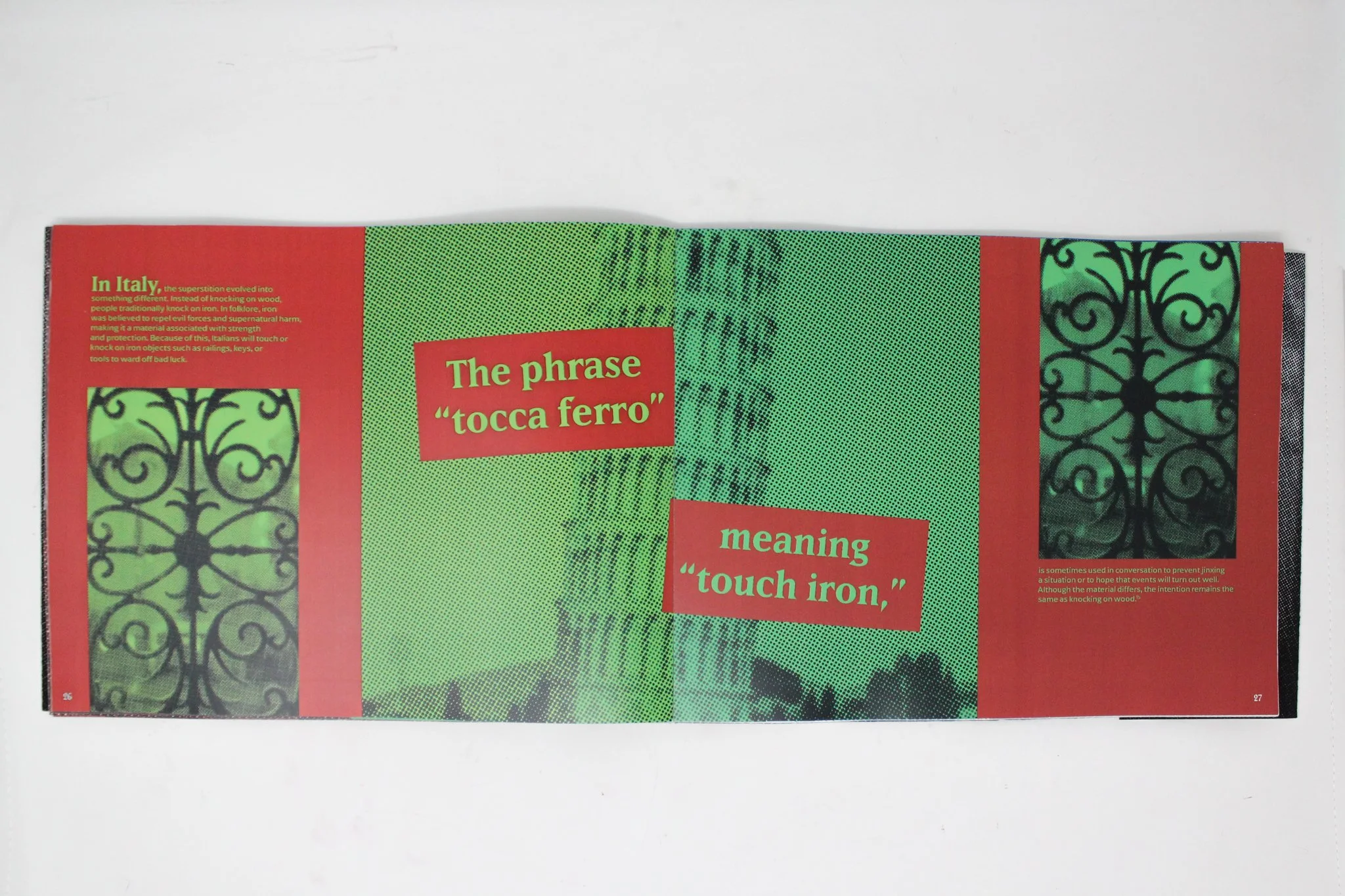
Knocking on wood is often done out of habit or in jest, but it raises the question of whether people actually believe in its effect. In my survey, about 15% of participants said they knock on wood to avoid jinxing themselves, even if they do not genuinely believe it works. While there is no proven effect, superstition often operates on psychology. The action provides a small sense of comfort and control in situations where the outcome is uncertain.
Evil Eye
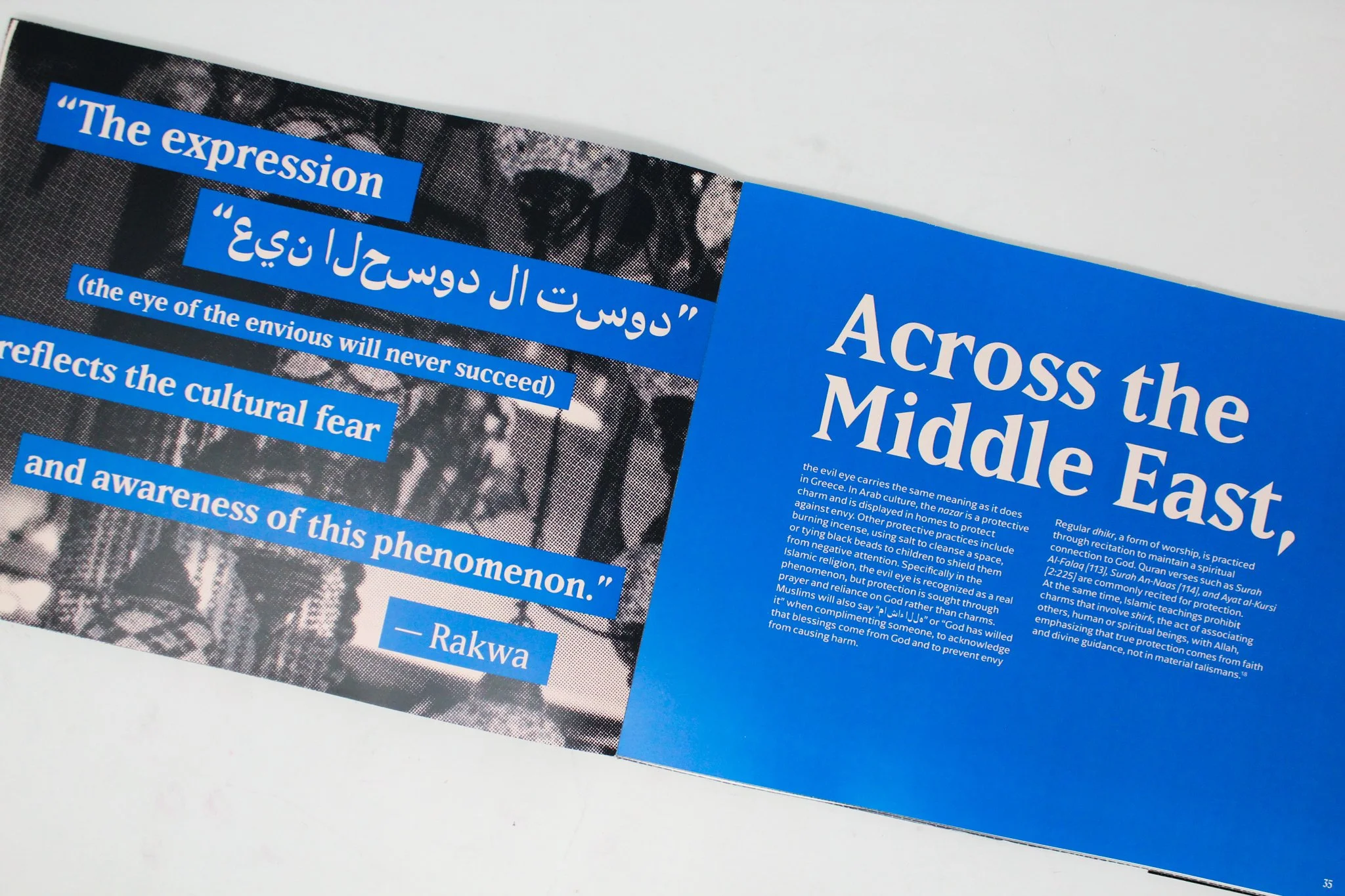
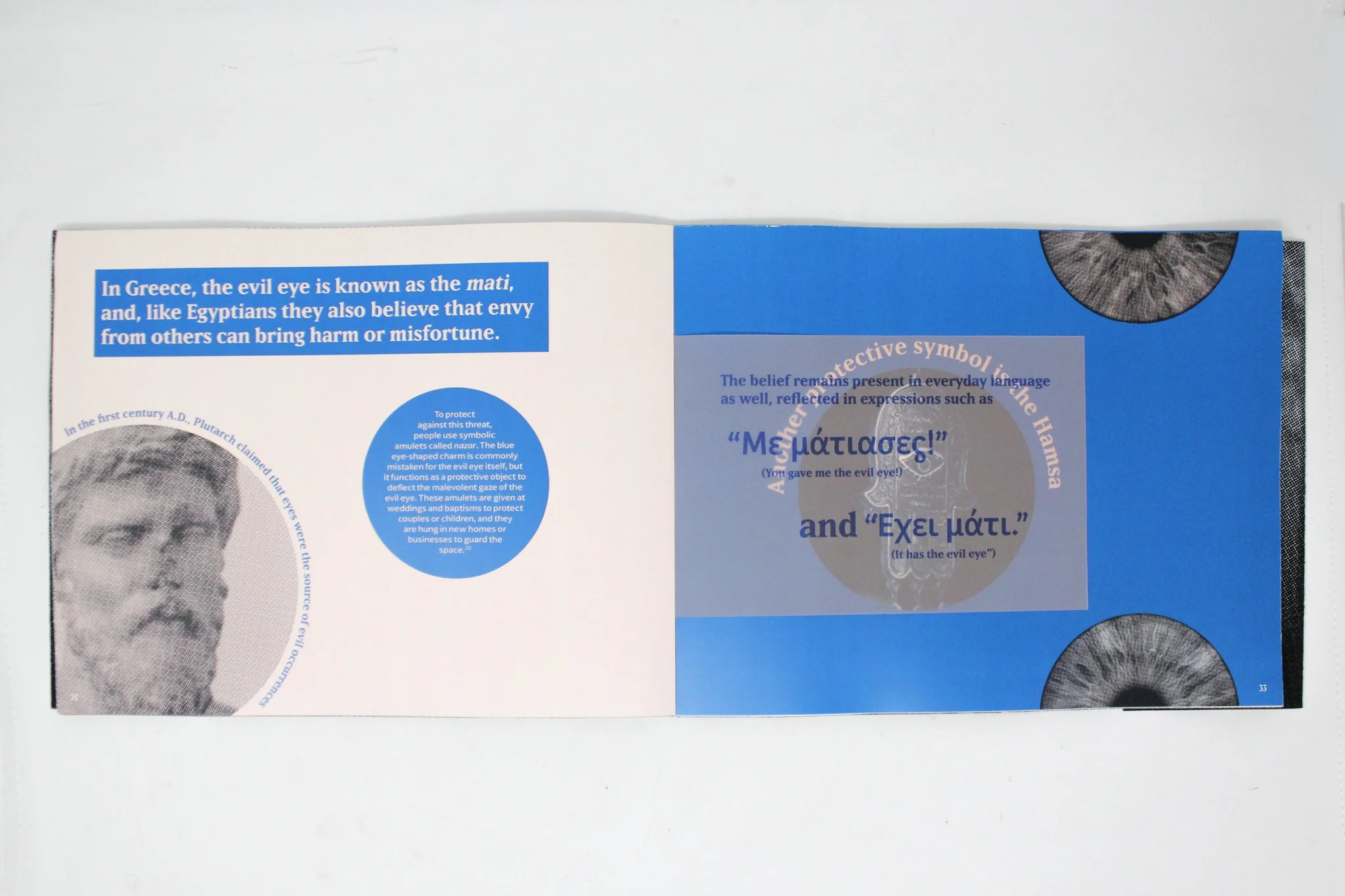
Similar to the walking under ladders section, this section was inspired by the circular form of Nazars²¹. The text is either contained within the circle or follows curved paths around it, reinforcing that shape throughout the layout. This spread is also the first instance where a language with a non-Latin script is introduced. I searched through Adobe Fonts for a typeface that supports Greek and selected one that pairs well with the Matrix typeface.
Mirrors Facing the Bed
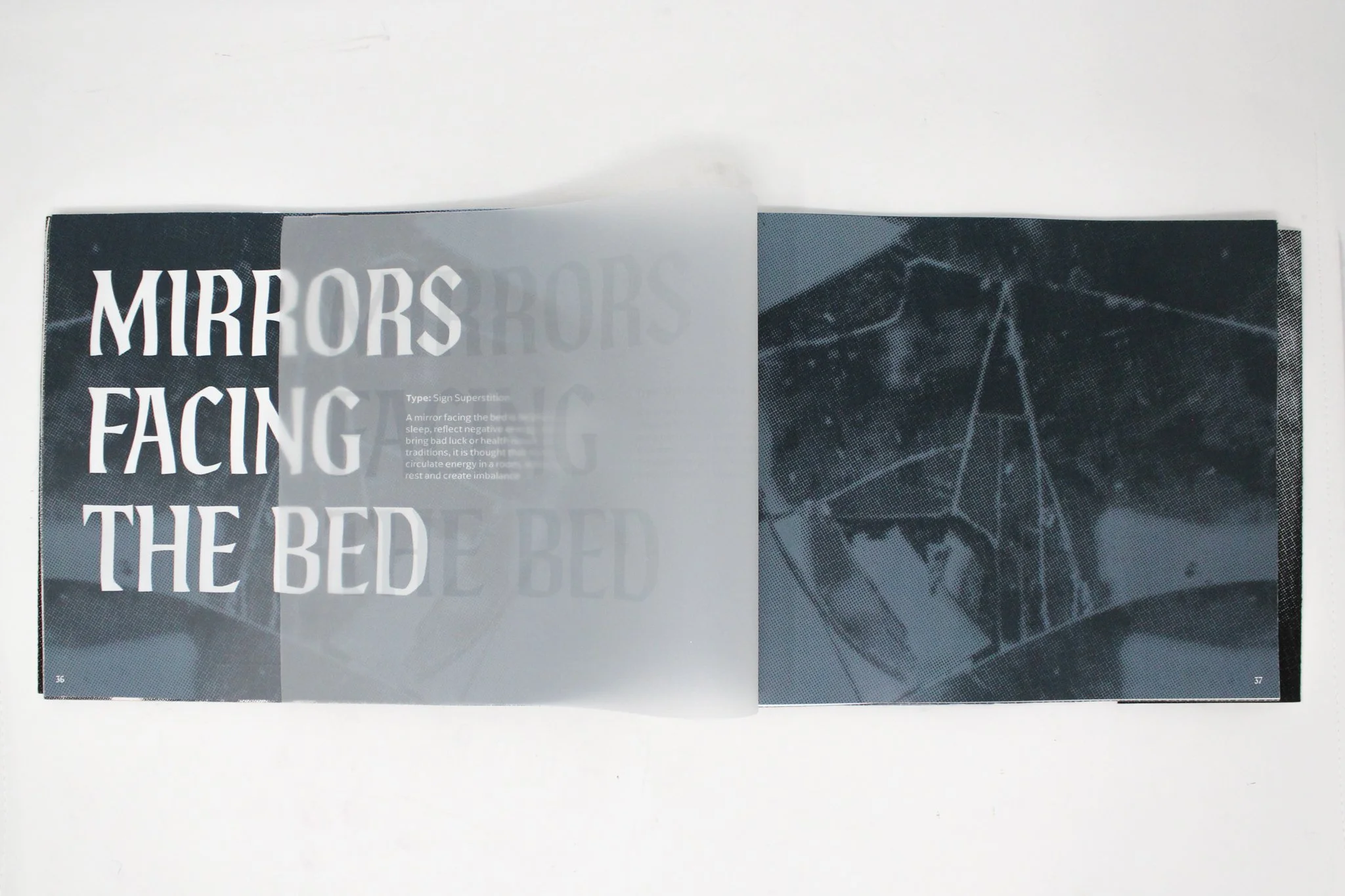
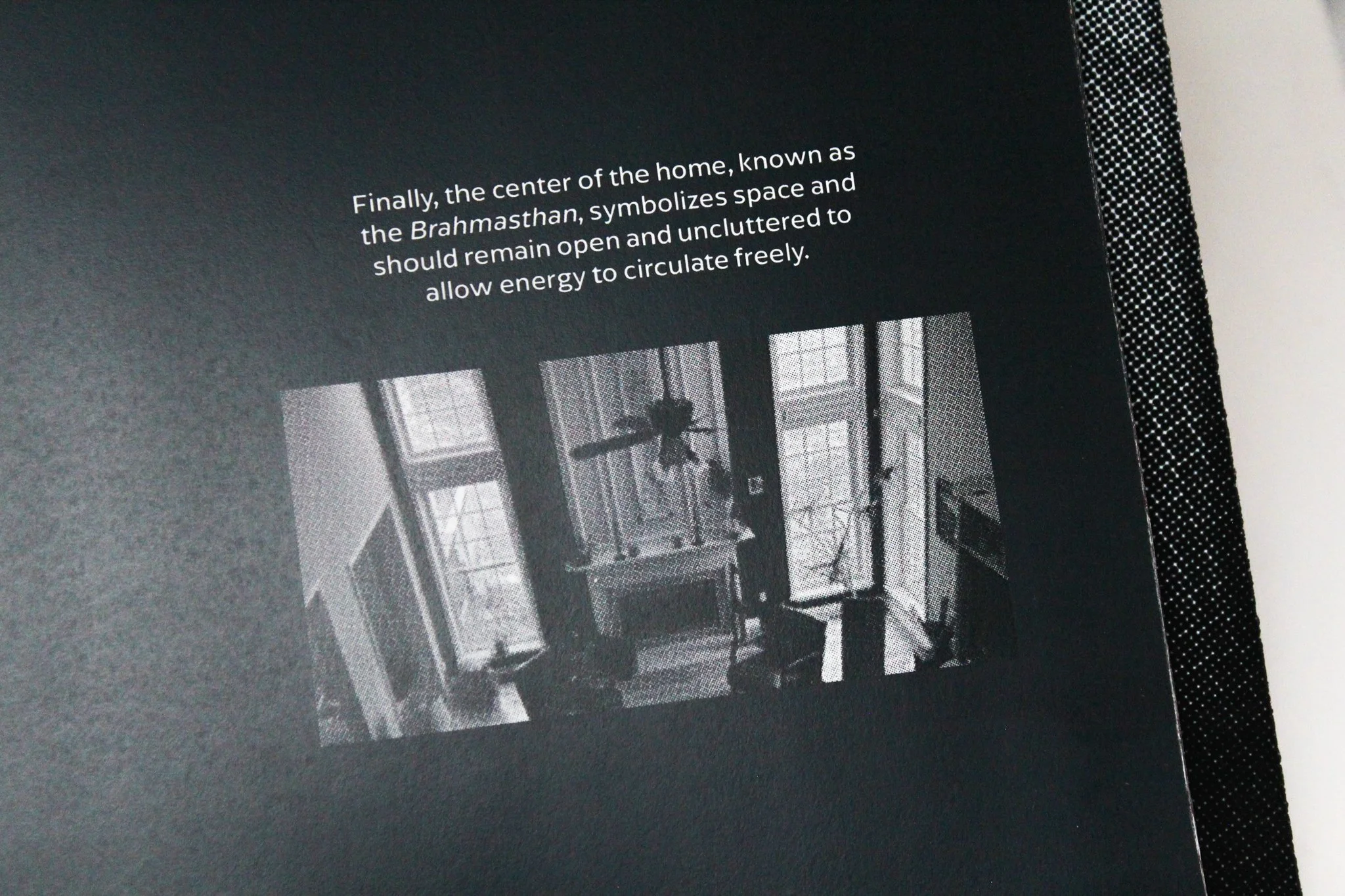
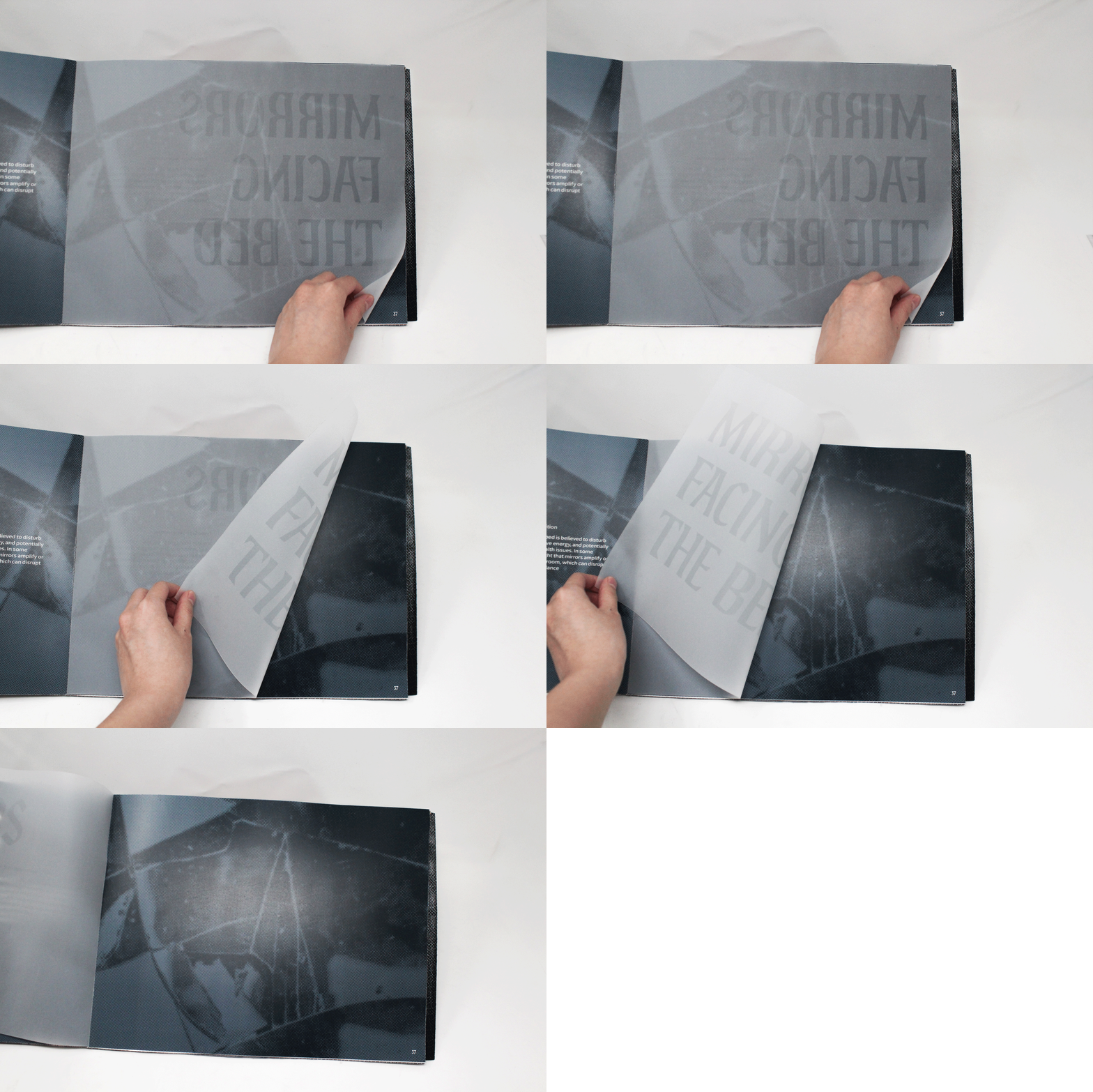
This superstition relates to spirits and energy²², concepts that are not physically tangible. To reflect this (pun intended), I chose a lighter gray to create an opaque quality, while the darker gray references the association with night. On the right side of the title spread, I incorporated vellum to simulate the presence of spirits and the reflective qualities of a mirror.
Dreamcatchers
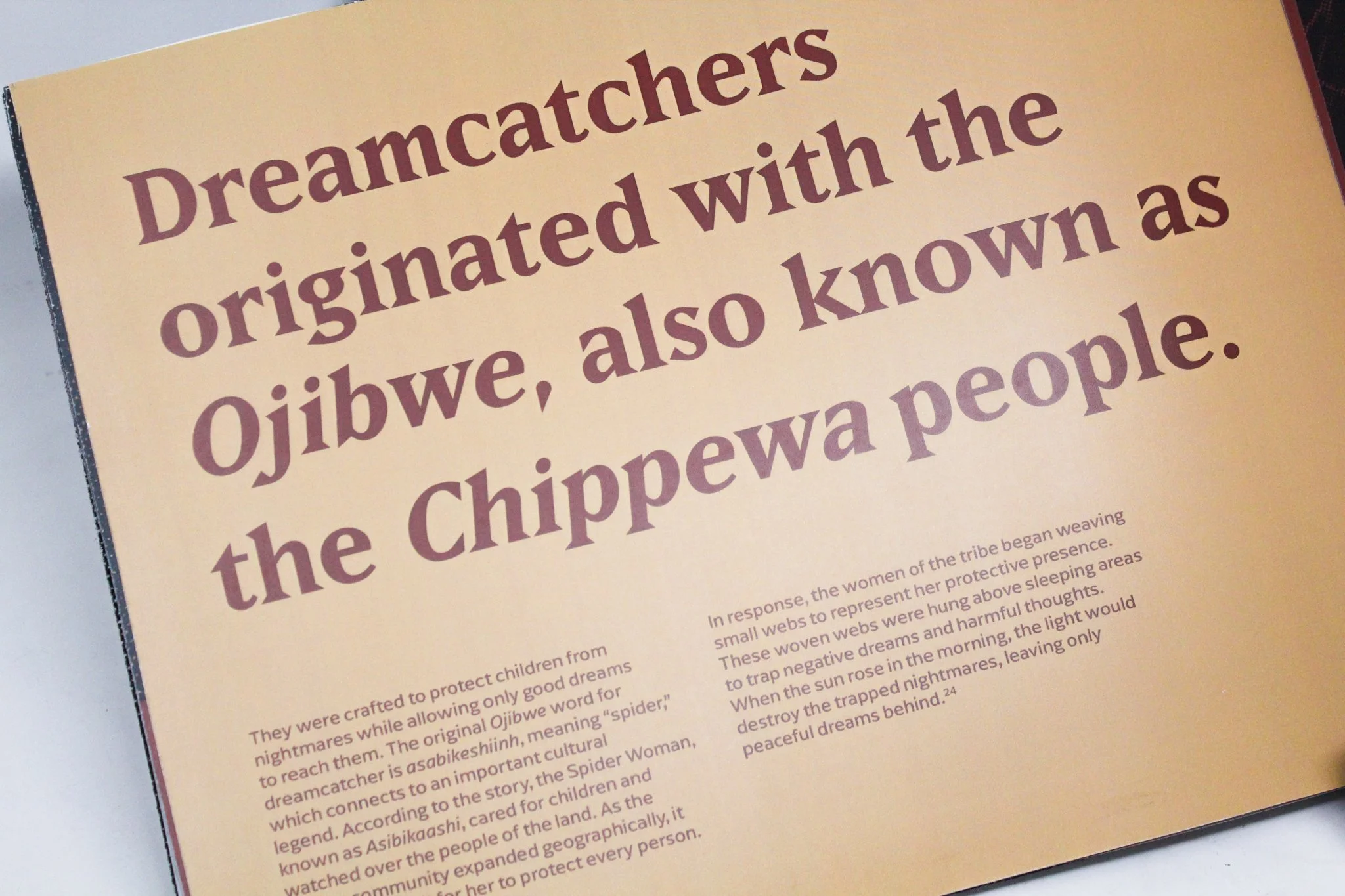
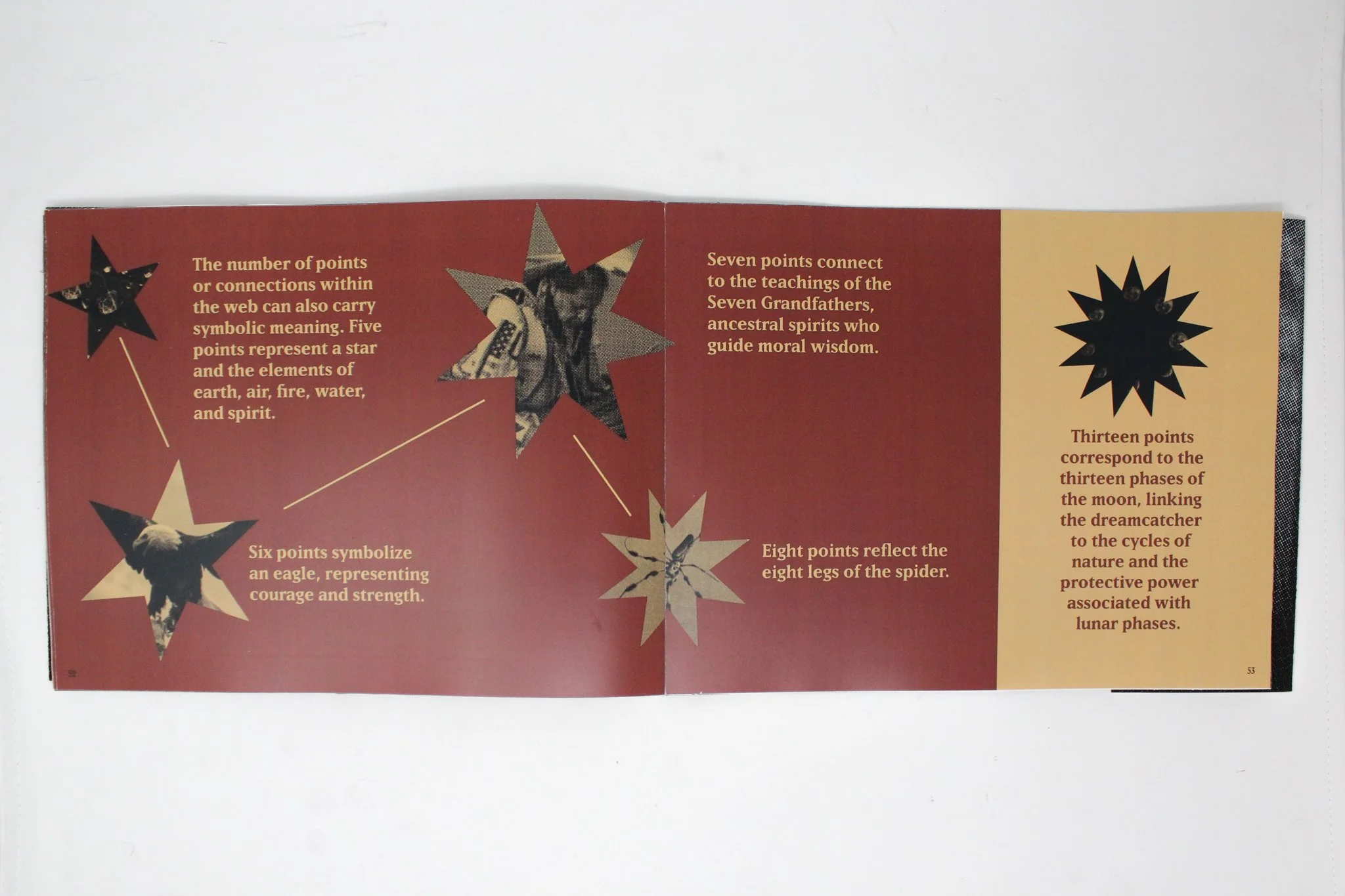
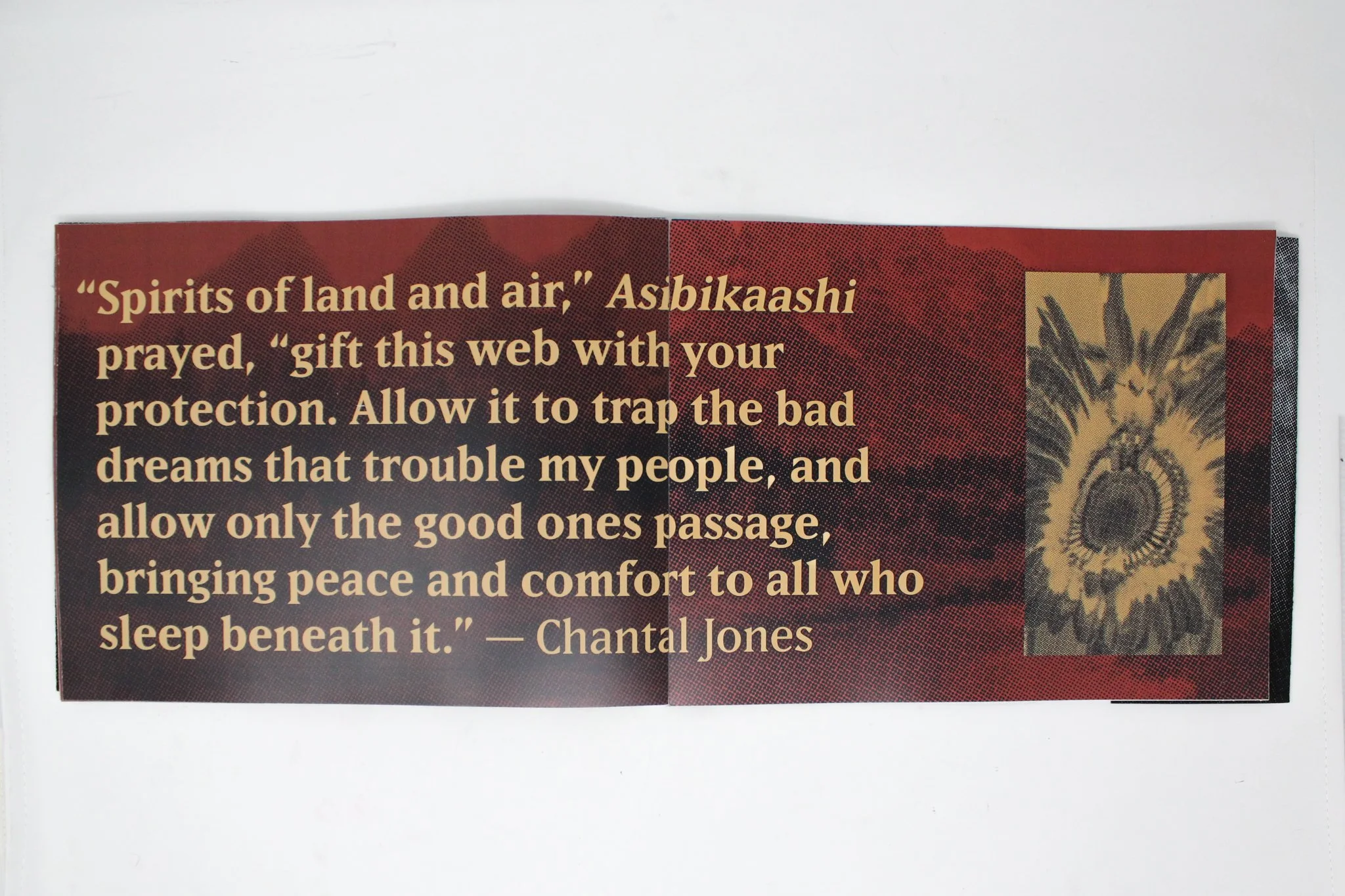
Dreamcatchers are often treated as decorative objects, but they hold deep cultural meaning within Native American communities. I was especially drawn to the story of Asibikaashi, the Spider Woman, and how women in the tribe began weaving dreamcatchers to represent her protection.
Wishing Wells
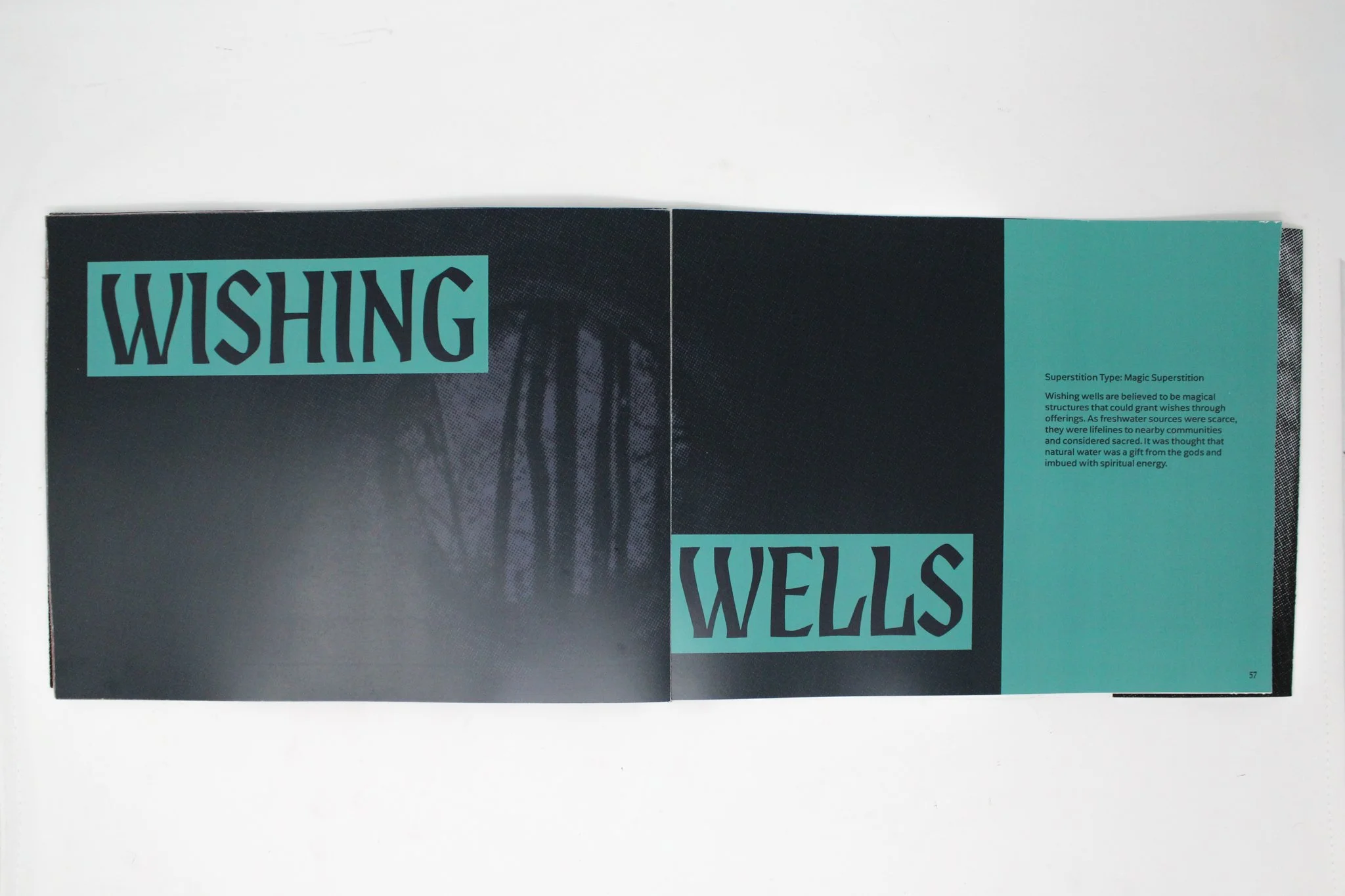
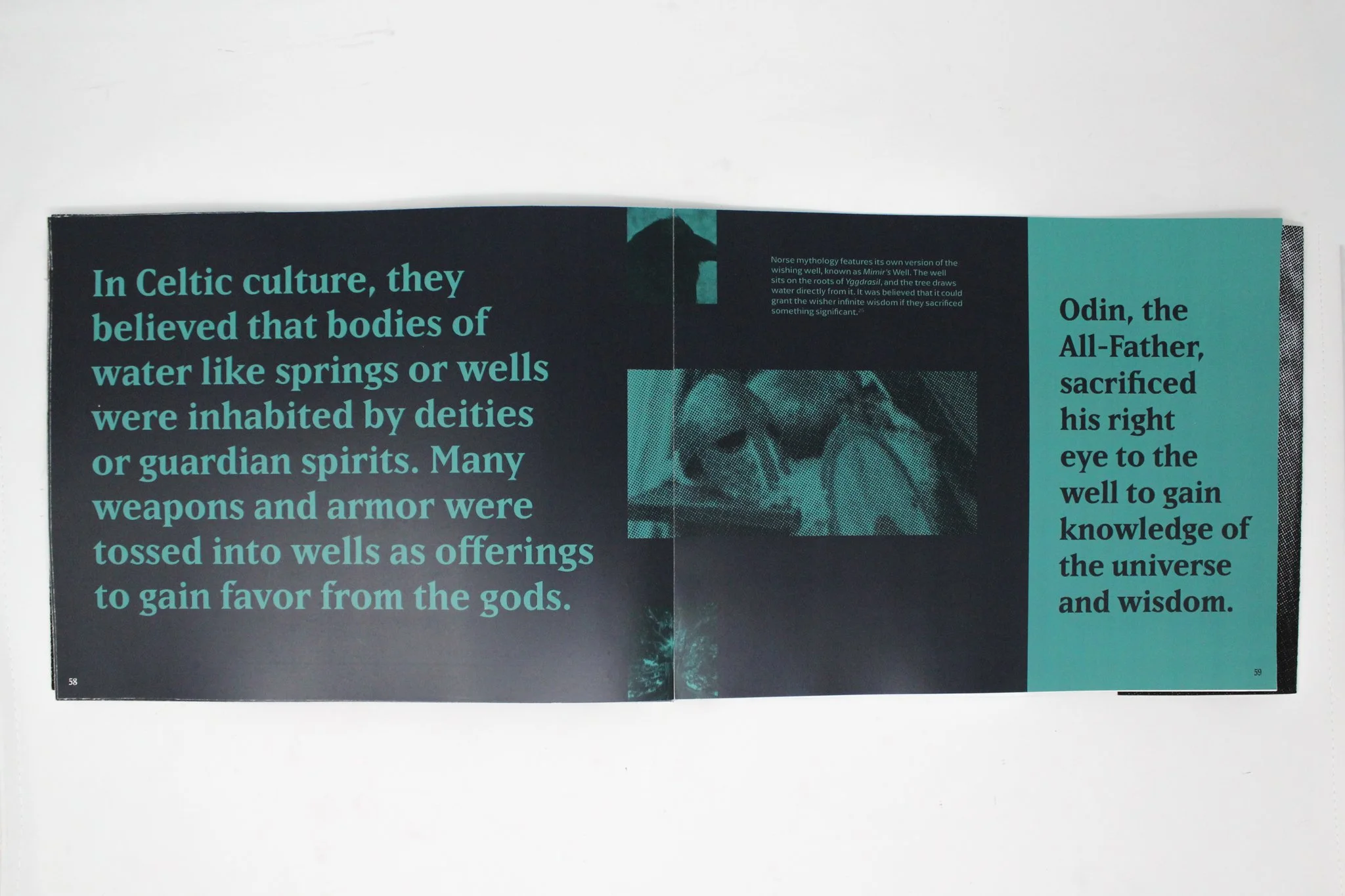
Black and green are not colors typically associated with wishing wells, but they are connected to Norse mythology. Green represents fertility, renewal, and the cycles of life. In Norse belief, the World Tree, Yggdrasil, symbolizes the continuous cycle of nature, life, and death. Black represents the depth of the well, while the green is muted to complement this darker base and create contrast within the spread.
Designer: Ashley Yang
Instructor: Nathan Young (Portfolio), Tyler School of Art and Architecture, Temple University
Photos: Adobe Stock and Unsplash
Typefaces: Adobe Fonts
BC Vajgar by Petra Dočekalová & Tomáš Brousil from Briefcase Type
Arpona Sans by Felix Braden from Floodfonts
Matrix II by Zuzana Licko from Emigre
Otta Arabic by Francisco Gálvez Pizarro from PampaType.
Bree Greek Variable by José Scaglione and Veronika Burian. From TypeTogether
Credits
References
-
[1] Dundes, A. (1961). Brown County Superstitions: The Structure of Superstition. Midwest Folklore, 11(1), 25–56. JSTOR. https://doi.org/10.2307/4317902
[2] Franziska Morlok, Waszelewski, M., & Waight, C. (2018). Bookbinding : a comprehensive guide to folding, sewing & binding. Princeton Architectural Press, A Mcevoy Group Company.
[3] Marchese, K. (2025, September 7). 21 Strangest Superstitions From Around the World That Influence How We Live. Architectural Digest Middle East; Conde Nast Portfolio. https://www.admiddleeast.com/story/strangest-superstitions-from-around-the-world
[4] Mulvania, A. (n.d.). 18 Superstitions from Around the World. Google Arts & Culture; Google. Retrieved April 9, 2026, from https://artsandculture.google.com/story/kAUxTWmzJ9QvLg
[5] Webster, R. (2012). The encyclopedia of superstitions. Llewellyn Publications. https://books.google.com/books/about/The_Encyclopedia_of_Superstitions.html?id=m1-xCL47_7QC
[6] Franziska Morlok, Waszelewski, M., & Waight, C. (2018). Bookbinding : a comprehensive guide to folding, sewing & binding. Princeton Architectural Press, A Mcevoy Group Company.
-
[7] “The Mysterious Cat Sìth: A Scottish Legend.” 2025. VISITING SCOTLAND. December 5, 2025. https://www.visitingscotland.com/discover/culture/cat-sith.
[8] John Duncan. 1917. The Coming of Bride. Painting. https://commons.wikimedia.org/wiki/File:Thecomingofbrideduncan1917.jpg.
[9] Syufy, F. (2025, June 5). Myths and Superstitions About Black Cats. The Spruce Pets. https://www.thesprucepets.com/black-cat-superstitions-554444
[10] Where Did the Black Cat Superstition Come From? (2026, March 9). ScienceInsights. https://scienceinsights.org/where-did-the-black-cat-superstition-come-from/
[11] Myogi Shrine (Komagome, Tokyo). (2024, May 7). Cat-Spot.com. https://cat-spot.com/en/myougijinjya/
[12] Meehan, E. (2022, September 29). Bastet. Mythopedia. https://mythopedia.com/topics/bastet/
-
[13] Sheldon, N. (2018, April 25). The Origins of 10 Ancient Superstitions We Still Follow Today. HistoryCollection.com. https://historycollection.com/the-origins-of-10-ancient-superstitions-we-still-follow-today/
[14]Athira. (2022, September 12). Walking Under Ladders — Meaning of the Superstition. Symbol Sage. https://symbolsage.com/walking-under-ladders/
[15]Ronca, D. (2015, August 6). Walking Under a Ladder: What’s Behind This Superstition. HowStuffWorks. https://people.howstuffworks.com/why-is-walking-under-ladder-unlucky.htm
-
[16] Lovejoy, B. (2025, November 4). Why Do We Knock on Wood? History Facts. https://historyfacts.com/world-history/article/why-do-we-knock-on-wood/
[17] Andrews, E. (2016, August 29). Why Do People Knock on Wood for Luck? | HISTORY. HISTORY. https://www.history.com/articles/why-do-people-knock-on-wood-for-luck
-
[18]Berger, A. S. (2012). The Evil Eye — An Ancient Superstition. Journal of Religion and Health, 51(4), 1098–1103. JSTOR. https://doi.org/10.2307/23352769
[19]Rakwa. (2025, July 21). The Evil Eye in Islam and Arab Culture: Beliefs, Protection, and Meaning. Rakwa — Arab American News. https://news.rakwa.com/2025/07/21/the-evil-eye-in-islam-and-arab-culture-beliefs-protection-and-meaning/
[20] Moses, H. (2026, January 8). The Evil Eye in Ancient Egypt: Fear, Envy, and Daily Life. Mythology and History. https://www.historyandmyths.com/2026/01/evil-eye-ancient-egypt-daily-life.html
[21] What Is the Evil Eye in Greece? Meaning, History, and Traditions. (2025, December 2). GetGreece. https://www.getgreece.com/post/evil-eye-greece
-
[22] Frisk, J. (2023, August 29). Mirror Facing Bed: Superstitions, Paranormal Beliefs, and Feng Shui. Angel Numbers, Astrology & Spiritual Symbolism. https://chi-nese.com/mirror-facing-bed-superstition/
[23] Bhattacharjee, S. (2025, July 23). A Complete Guide to Vastu Shastra for Home Design. AND Academy. https://www.andacademy.com/resources/blog/interior-design/vastu-shastra-for-home-design/#Things
-
[24] Jones, C. (2025, November 23). Asibikaashi: Spider Woman. The Varsity; The University of Toronto’s Student Newspaper Since 1880. https://thevarsity.ca/2025/11/23/asibikaashi-spider-woman/
[25] Rose Mulu. (2022, September 29). What Is a Dreamcatcher and What Does it Mean? Symbol Sage. https://symbolsage.com/dreamcatcher-meaning-symbolism/
-
[26] Suman, S. (2021, March 21). The Evolution of Making Wishes Through “Wishing Wells.” Medium. https://swati-suman.medium.com/ever-wished-explore-the-origins-of-making-wishes-through-wishing-wells-bf8ea464dcf9
[27] HowStuffWorks. (2025, March 26). Wishing Wells: Meaning, Superstitions, and Famous Locations. HowStuffWorks. https://people.howstuffworks.com/wishing-well.htm#pt1
[28] Lefler, L. (2018, November 14). Wishing Wells: An Uncommon History of Coin Tossing, Water, and Hope for Divine Intervention. HubPages. https://discover.hubpages.com/living/Wishing-Wells-An-Uncommon-History-of-a-Common-Garden-Decoration